
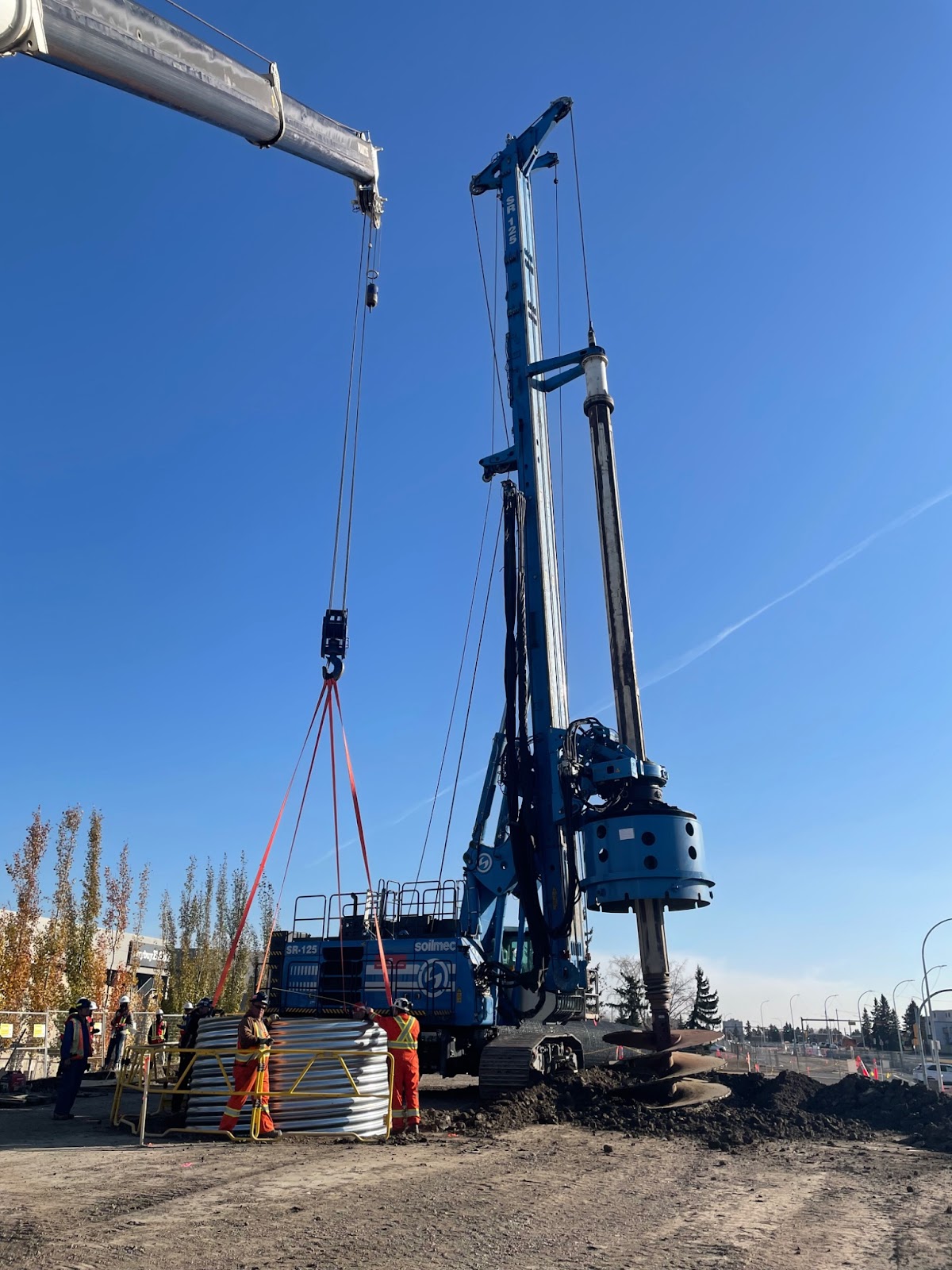
Open hole, cased, and slurry methods are primary techniques for drilled shaft construction, used by foundation drilling operators to create high-capacity deep foundations. Open hole methods are suitable for stable soils above groundwater. Cased methods utilize steel casing for unstable or caving conditions, while slurry methods employ stabilizing fluids for challenging subsurface environments with water or loose soils.
Foundation drilling operators face tough choices daily: using open hole methods for speed in stable ground, utilizing casing equipment to combat caving soils and groundwater, or employing slurry for deep shafts in saturated conditions. Wrong picks lead to sloughing, lost production, base contamination, or failed integrity tests — costing time and money on every job.
This guide breaks down each method’s process, field applications, and equipment needs, showing how the right foundation drilling equipment and equipment solutions maximize quality and efficiency for drilled shafts in bridges, buildings, and heavy structures.
What are open hole, cased, and slurry drilling methods?
Drilled shafts form high-capacity, deep foundations by excavating a hole, placing reinforcement, and filling it with concrete to transfer structural loads to the bearing strata. Operators select from open hole, cased, or slurry methods based on soil stability, groundwater conditions, and site accessibility.
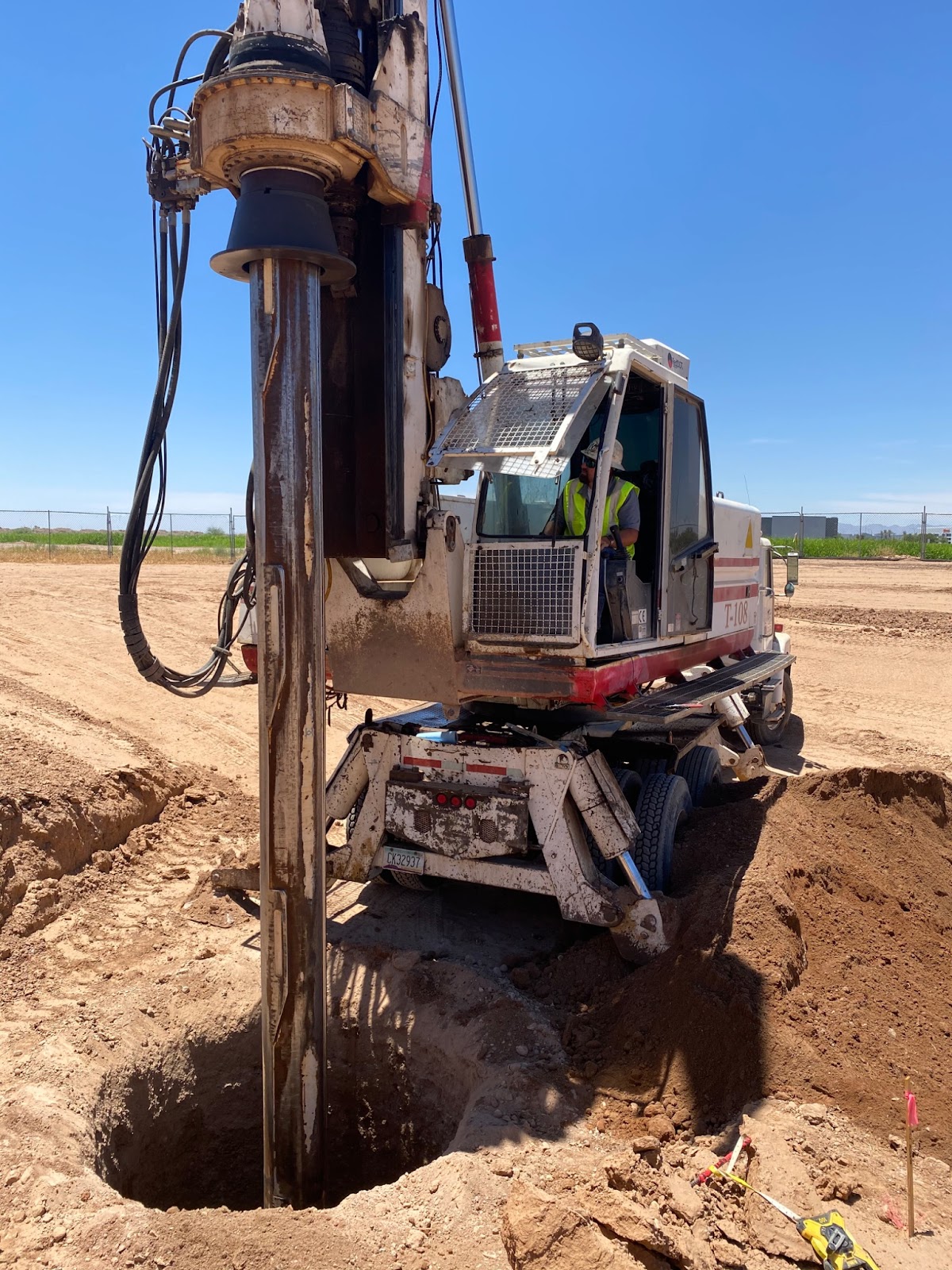
Use the open hole method in stable soil conditions where you can keep the hole open without the need for added support.
Cased methods involve installing either temporary or permanent steel casing to maintain the borehole’s stability.
Slurry methods utilize polymer or bentonite fluids to stabilize bores in adverse conditions, such as high groundwater levels or soils with voids.
How drilled shaft construction methods work
Open hole method
Crews first assess soil conditions to confirm stability above the groundwater level; stiff clays or cemented sands often meet the requirements. Crews use an auger or bucket to excavate the hole to the required depth, and then they clean the base to remove loose sediments.
After inspecting the hole — either manually or with a camera — you lower the reinforcement cage into place and then pour the concrete. The completed foundation is then ready to support structural loads.
Cased method
The cased method utilizes temporary or permanent steel casing to maintain the borehole’s stability. A steel casing is advanced into the ground while simultaneously drilling to prevent collapses.
Once you install it, remove the casing if it’s temporary, or leave it in place for added support if it’s permanent. Permanent casing is especially useful in unstable soil, granular soils, or when drilling below the water table.
Slurry method
The slurry method uses a drilling fluid (slurry) to support the borehole walls. A slurry, typically a mixture of water and clay minerals like bentonite, is pumped into the hole to create pressure against the walls. This keeps the hole from caving in, even in difficult soil conditions. As crews place concrete in the shaft, the concrete displaces the slurry, and they pump the slurry out.
Construction process
- Drilling: Operators use an auger or other rotary drilling equipment to drill a hole to the required depth and diameter.
- Stabilization: Crews stabilize the hole using the open hole, cased, or slurry method.
- Reinforcement: Crews lower a full-length reinforcing steel cage into the hole.
- Concrete placement: Concrete is poured into the hole, often using a tremie pipe to place it at the bottom and displace the slurry.
- Completion: After crews place the concrete, they remove the temporary casing and leave the permanent casing in place. The completed drilled shaft is ready to bear compressive, uplift, and lateral loads.
Why drilling method selection matters
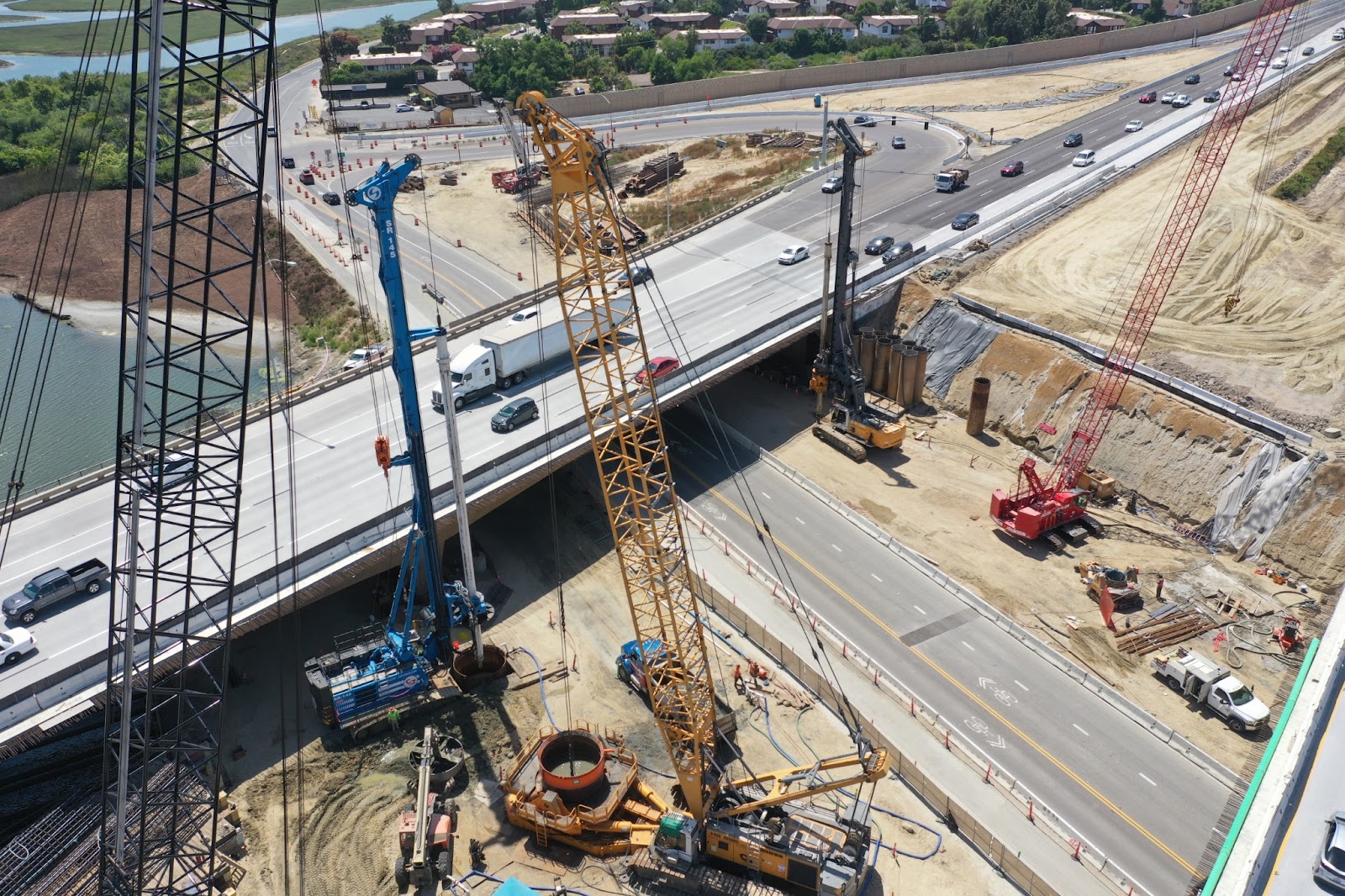
Proper method choice ensures shaft continuity, clean bases for end-bearing, and side resistance without defects like necking or soft toes. It optimizes the use of foundation drilling equipment, reduces rework due to collapses, and aligns equipment solutions with site-specific demands.
- Maximizes production in stable zones while stabilizing risks elsewhere.
- Supports integrity testing (CSL, GGL) for verified quality.
- Reduces hazards from inflows or caving with targeted casing equipment.
Benefits of drilled shafts
- You get a broad selection of drilling equipment and tooling suited for a wide range of ground conditions.
- There’s proven experience with both open hole and wet shaft construction methods.
- These are specialized solutions for limited-access and confined job sites.
- These techniques enable you to construct drilled shafts ranging from 12 to 240 inches in diameter.
- In-house manufacturing facilities design, fabricate, repair, maintain, and modify equipment and tooling.
- There’s flexibility to shift to alternate foundation systems when site conditions change.
- There’s experience across a diverse range of foundation and construction applications.
- There’s no risk of rupturing, cracking, or damaging vibrations to nearby structures like there is with driven piles.
- Drilled shafts make less noise than driven piles.
- Inspectors can visually inspect drilled shafts.
- There’s no need for pile caps.
- Drilled shafts can be installed above or below groundwater tables, in sand, in clay and rock, in deposits with cobbles, in Karst areas, in collapsible soils, in compressible strata, and in liquefiable soils.
Mistakes to avoid with drilled shafts
- Don’t drill dry in caving granular soils without casing equipment, as this risks hole loss.
- Don’t ignore groundwater, as this will delay slurry or cased until seepage overwhelms.
- Avoid poor slurry management, which may cause thick filter cakes or base sediments.
- Avoid extracting the temporary casing too fast, as this may contaminate fresh concrete.
- Don’t skip inspections before cage placement in any method.
Key insights about the drilled shaft technique
- Open hole casing suits low-water, stable profiles up to moderate depths.
- Casing is essential to prevent voids, corrosion, or water intrusion.
- Slurry enables deep/wide shafts but demands fluid testing; integrity tests confirm results.
Recommended foundation drilling equipment and casing equipment
Successful foundation drilling depends on using the right equipment for the ground conditions. For open hole and cased shafts, you’ll need:
- Rotary drilling rigs
Select rigs that provide the required torque, crowd force, and depth capacity for the specific foundation application. - Drilling tools
Use drilling buckets, augers, and core barrels matched to the soil type and rock strength on site. - Temporary casing equipment
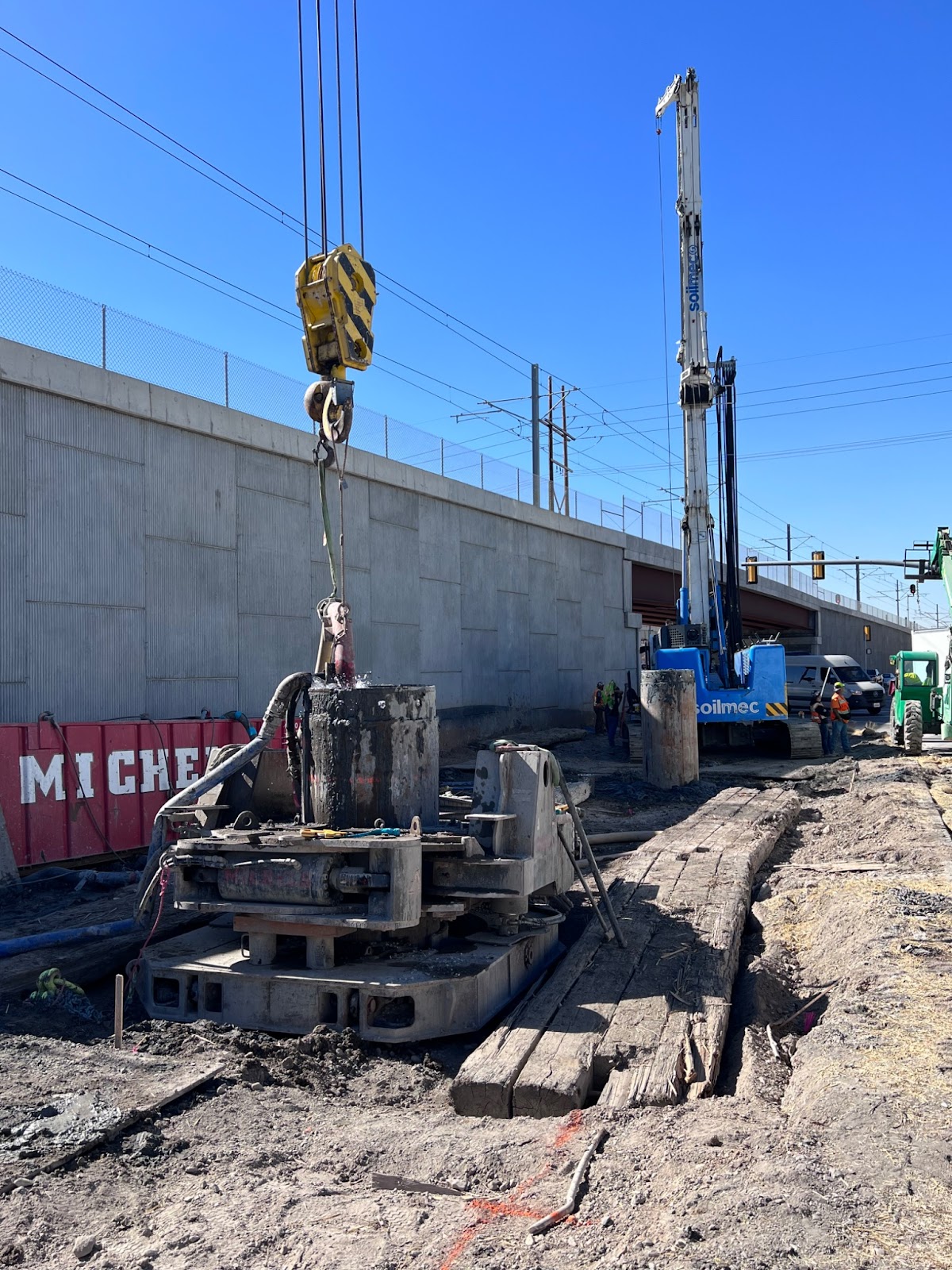
Employ casing, oscillators, or rotators when working in difficult soils or tight urban environments where hole stability is critical.
For slurry-supported shafts, additional systems come into play:
- Size slurry mixing and storage tanks to match anticipated production and shaft volume.
- Slurry cleaning and recycling units
- Engineers design tremie systems to place concrete reliably under slurry with sufficient head and flow.
Working with a provider that specializes in integrated equipment solutions — rigs, casing equipment, slurry systems, and tooling — helps operators configure job-specific packages that align with their typical soils and project types.
FAQs about open hole, cased, and slurry methods
How do I decide between open hole, cased, and slurry methods?
Start by evaluating soil conditions and groundwater levels. Open hole methods work best in stable, dry soils. Crews typically use the cased method when there is a risk of cave-ins or groundwater intrusion. Slurry methods are better suited for saturated soils or large-diameter shafts. Test borings provide valuable insight and help determine when a switch between methods is needed.
When is casing equipment essential?
Casing equipment is essential in granular or caving soils, in areas with high groundwater, or when working near existing structures. Temporary casing supports the hole during drilling, and crews may use permanent casing to address corrosion concerns or prevent voids in the surrounding soil.
What advantages does slurry offer?
Slurry helps stabilize deep or wet bores, allowing drilling to continue in challenging conditions, including areas with boulders. It also pairs well with integrity testing, giving contractors greater confidence in the quality and performance of the finished foundation.
Can drilling methods be combined on one site?
Yes, crews can use multiple methods on the same site. Projects often start with an open hole method near the surface and transition to cased or slurry at deeper levels. Planning for flexible foundation drilling equipment from the start makes it easier to adapt as ground conditions change.
Partner with Western Equipment Solutions
Ready to drill smarter on your next drilled shaft project?
At Western Equipment Solutions, we deliver comprehensive foundation drilling equipment packages — including rigs, tooling, and casing equipment — tailored precisely to meet the needs of open hole, cased, or slurry methods for any soil or groundwater challenge.
Choose Western Equipment Solutions for all your drilling needs. We provide a full fleet of high-torque rotary rigs, telescoping casing equipment, and slurry systems, available for immediate rental or purchase.
Our team also offers expert consultation to match foundation drilling equipment to your geotechnical reports, site access, and production goals. With on-site support, operator training, and fast parts delivery, we help keep your crews drilling efficiently and on schedule.
Contact Western Equipment Solutions today to find the right foundation drilling equipment and casing equipment for your needs.
Don’t let method mismatches or equipment downtime cost you. Partner with Western Equipment Solutions — your complete source for foundation drilling equipment and equipment solutions that deliver results.