
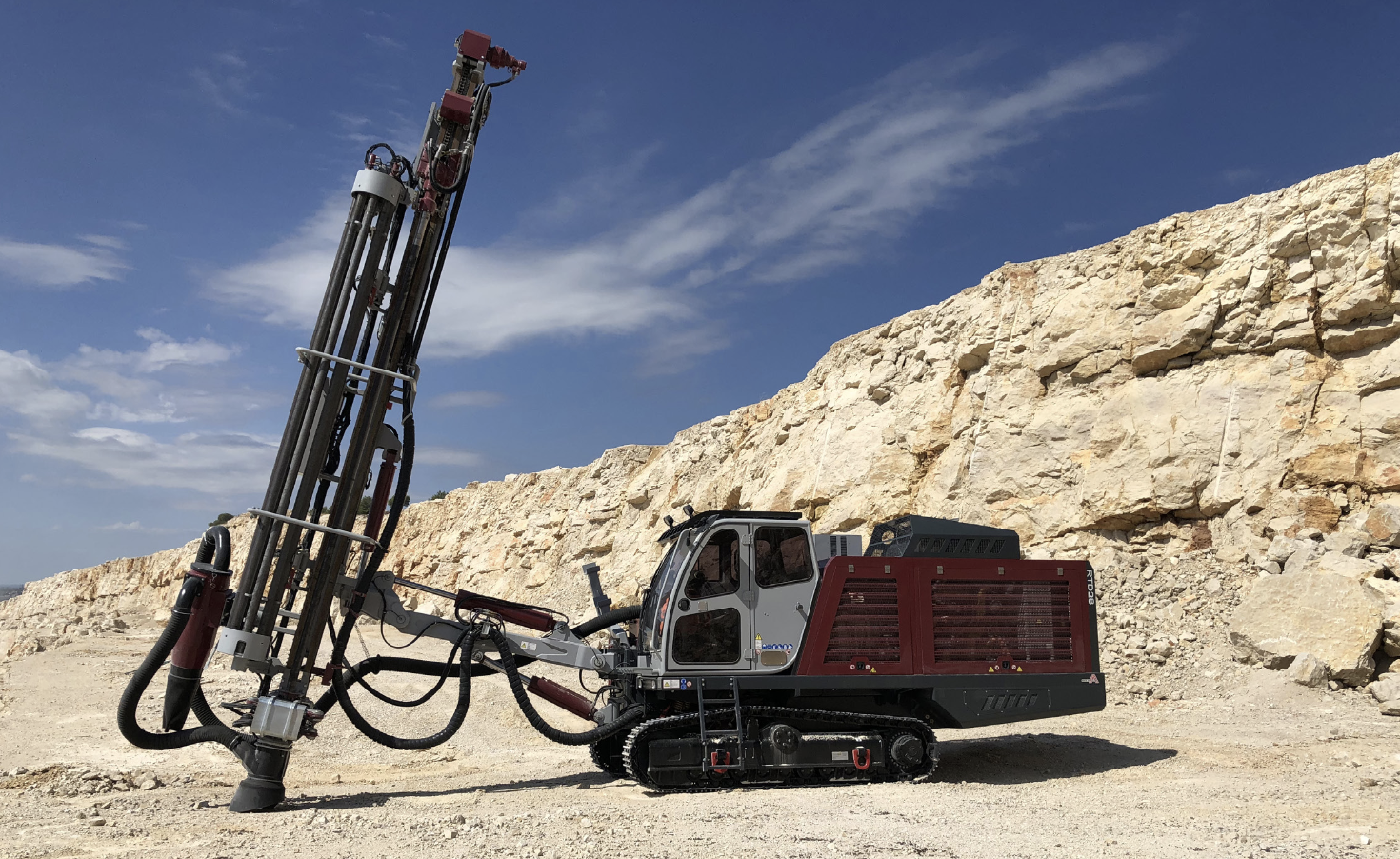
RTDrill by Reichdrill drilling machines are high-performance drilling equipment designed for quarries, mining, and construction blasting. They use down-the-hole hammer technology and rotary to create precise blast holes in hard rock. Known for durability and efficiency, these equipment solutions deliver consistent results using advanced air-powered drilling supply and systems.
In quarrying and mining operations, efficiency is everything. Choosing the wrong drilling equipment will slow production, increase costs, and create inconsistent blasting results.
That’s where RTDrill drilling machines stand out. Built for quarries, mining operations, and large construction blasting applications, these machines handle the toughest conditions while maintaining precision and reliability.
In this guide, you’ll learn how RTDrill rigs work, why they’re trusted across North America, and how the right equipment solutions, drilling supplies, and support will dramatically improve your operation’s productivity and long-term profitability. Keep reading to learn more.
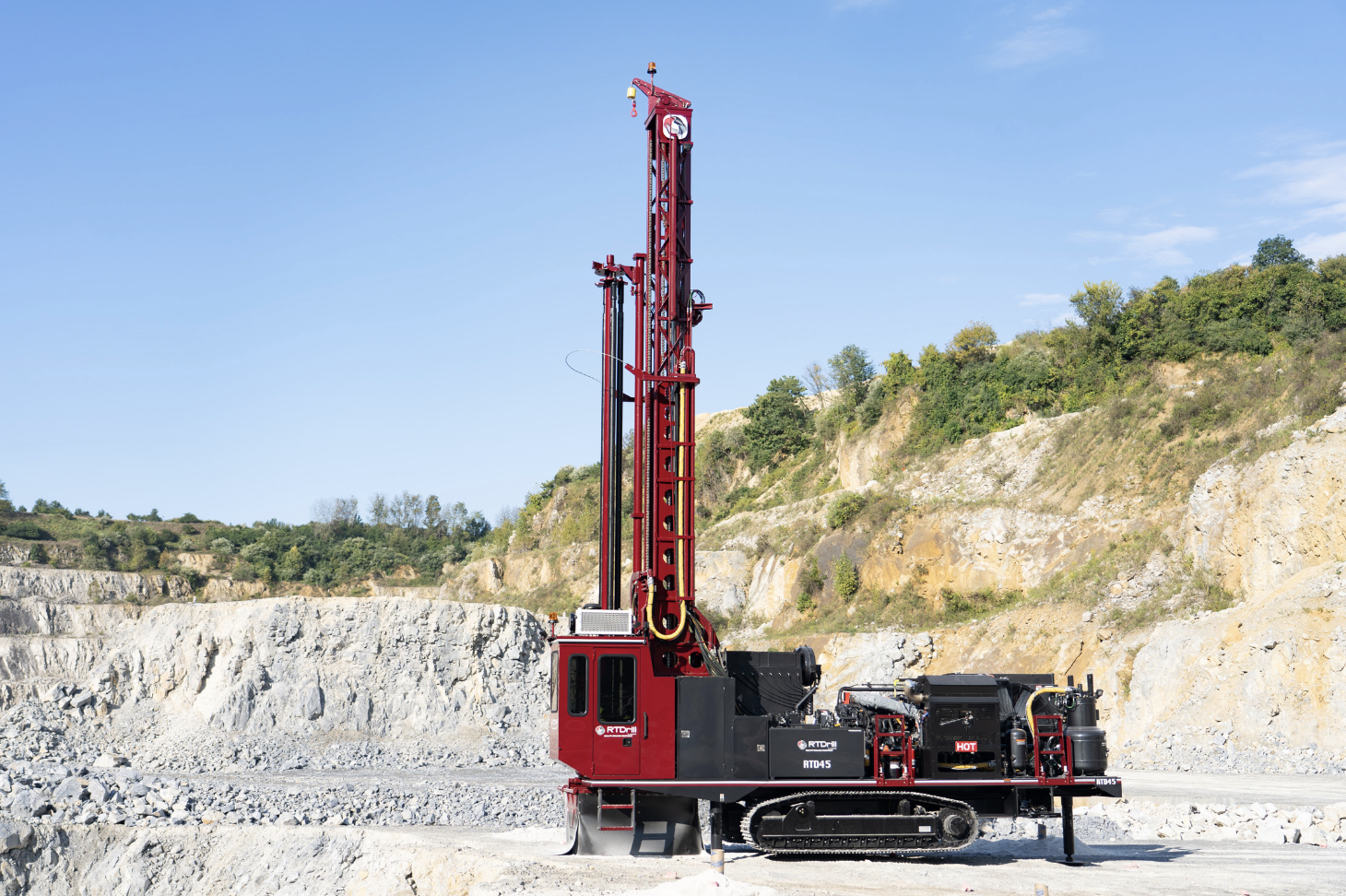
What are RTDrill DTH drilling machines?
RTDrill (Reichdrill) drilling machines create blast holes in hard rock environments such as quarries, mines, and large construction sites. These machines use down-the-hole (DTH) hammer technology, where a pneumatic hammer operates directly at the bottom of the hole, delivering powerful, high-frequency impacts.
Unlike traditional rotary systems, DTH drilling delivers superior hole straightness and accuracy, especially in dense materials. RTDrill rigs are crawler-mounted, allowing them to move easily across uneven terrain while maintaining stability during operation.
These machines are part of a broader category of equipment solutions designed for high-production drilling. With integrated air compressors, hydraulic feed systems, and robust mast designs, these durable rigs perform at the highest level. Their compatibility with a wide range of drilling supplies makes them highly versatile in the field.
What blast hole rigs do
Blast hole drills create precise boreholes in rock formations so that expansive materials or explosives can be placed and detonated to fragment the material efficiently. These machines are commonly used in aggregate quarries, open‑pit mining, overburden removal, road and infrastructure blasting, and large excavation projects. Hole diameters typically range from 4 to 10 inches (100–311 mm), depending on the specific model and ground conditions.
Key components of an RT blast hole rig
1. Crawler undercarriage
The crawler undercarriage has heavy-duty tracks for stability and allows rigs to move across benches in quarries.
2. Mast
A vertical structure supports the drill string and typically has 30-40 feet of drill pipe capability.
3. Rotary head
The rotary head provides torque to rotate the drill string. It’s designed for large tricone or DTH hammer assemblies.
4. Air compressor
The air compressor is a critical component for DTH drilling, used for power hammering and to remove cuttings.
Typical specs:
- 700–1,400+ CFM
- 300–400 PSI
5. Feed system
Hydraulic cylinders provide a pull-down force that pushes the bit into rock.
Drilling methods used on RTDrill rigs
Down-The-Hole (DTH)
Down‑The‑Hole (DTH) drilling is the most common method used for hard rock blasting. High‑pressure air powers a pneumatic hammer located at the bottom of the drill string, which strikes the drill bit thousands of times per minute to break the rock. The same compressed air blows the cuttings out of the hole, keeping the bore clear.
This approach produces very straight boreholes and performs exceptionally well in hard formations such as granite, basalt, and limestone.
Rotary drilling
Rotary drilling is more commonly used in softer rock or overburden formations. A large rotary head spins a tricone bit while hydraulic downforce pushes the bit into the formation, and air is used to remove the cuttings.
This method is faster in soft ground and typically has lower operating costs. Many RTDrill rigs are convertible between rotary and DTH drilling, giving operators the flexibility to match the drilling method to ground conditions.
Typical RTDrill blast hole models
There are three RTDrill blast hole models used regularly.
RTD28 (Small quarry drill)
- Hole diameter: 3.7-6 inches (95-152 mm)
- Engine: ~385-416 HP
- Air volume: 727 CFM
- Weight: ~54,000 lbs
The RTD28 is best for smaller quarries, construction blasting, and limestone and aggregate pits.
RTD32 (Mid-size production drill)
- Hole diameter: 4.7-8 in (120-200 mm)
- Engine: ~540–550 HP
- Air output: ~1,000 CFM at ~406 PSI
- Weight: ~70,000 lb
The RTD32 is best for mid-size quarries, highway blasting, and aggregate production.
RTD70 (Large production drill)
- Hole diameter: 5–10 in (127–254 mm)
- Engine power: 755–950 HP
- Compressor: 1,070–1,370 CFM
- Max depth: ~148 ft
The RTD70 is best for large mining operations, deep blast patterns, and hard rock production drilling.
Typical blast hole drilling cycle
- The drill rig operator positions the machinery precisely over the designated hole location.
- The mast is leveled and aligned to ensure accurate hole angle.
- The drill pipe and bit begin rotating, preparing for penetration.
- The air compressor powers the DTH hammer and helps clear cuttings from the hole.
- The hole is drilled to the required depth in accordance with the blast pattern.
- The drill string is withdrawn once drilling is complete.
- The borehole is then loaded with explosives or expansive materials for the blast.
- In a quarry, a single rig can drill hundreds of holes for one blast pattern.
Benefits of RTDrill equipment
Contractors often choose RTDrill rigs because:
- They are built with a heavy-duty, American-manufactured frame known for durability.
- The mast structures and overall rig frame are robust and handle demanding conditions.
- They deliver high air output, which supports strong DTH hammer performance.
- Their hydraulic systems are relatively simple, making routine field maintenance easier and less time‑consuming.
- The lineup offers multiple configurations, including DTH, rotary, and truck‑mounted rigs, so that contractors can select the right setup for their application.
Mistakes when using DTH drilling equipment
- Using incorrect drilling supplies for specific rock conditions
- Operating with insufficient air pressure and volume, reducing hammer efficiency
- Ignoring routine maintenance on compressors and hydraulic systems
- Misaligning the mast, leading to inaccurate hole angles
- Overloading the feed system, causing unnecessary wear
- Choosing the wrong equipment solutions for the project scale
Avoiding these issues helps extend the life of your drilling equipment and ensures consistent performance across projects.
FAQ
Q: What makes DTH drilling better for hard rock?
DTH drilling uses a hammer at the bottom of the drill string to deliver direct impact energy to the rock. This results in faster penetration, straighter drill strings, and greater efficiency than other drilling methods in dense formations.
Q: How deep can RTDrill DTH machines drill?
Depending on the model and configuration, RTDrill machines can drill up to 148 feet. Depth capacity varies based on drilling equipment setup, air pressure, and the type of drilling supplies being used.
Q: What industries use RTDrill equipment solutions?
RTDrill machines are widely used in quarrying, mining, construction blasting, and infrastructure development. These equipment solutions are ideal for any operation requiring high-production drilling in hard rock conditions.
Q: How important is air pressure in DTH drilling?
Air pressure is critical because it powers the hammer and removes debris from the drill string. Insufficient pressure reduces drilling speed and increases wear on drilling equipment, while optimal pressure ensures efficient, consistent performance.
Q: Can RTDrill rigs switch between drilling methods?
Yes, many RTDrill rigs are designed as flexible equipment solutions that can switch between DTH and rotary drilling. This adaptability allows operators to handle varying ground conditions with the same drilling equipment.
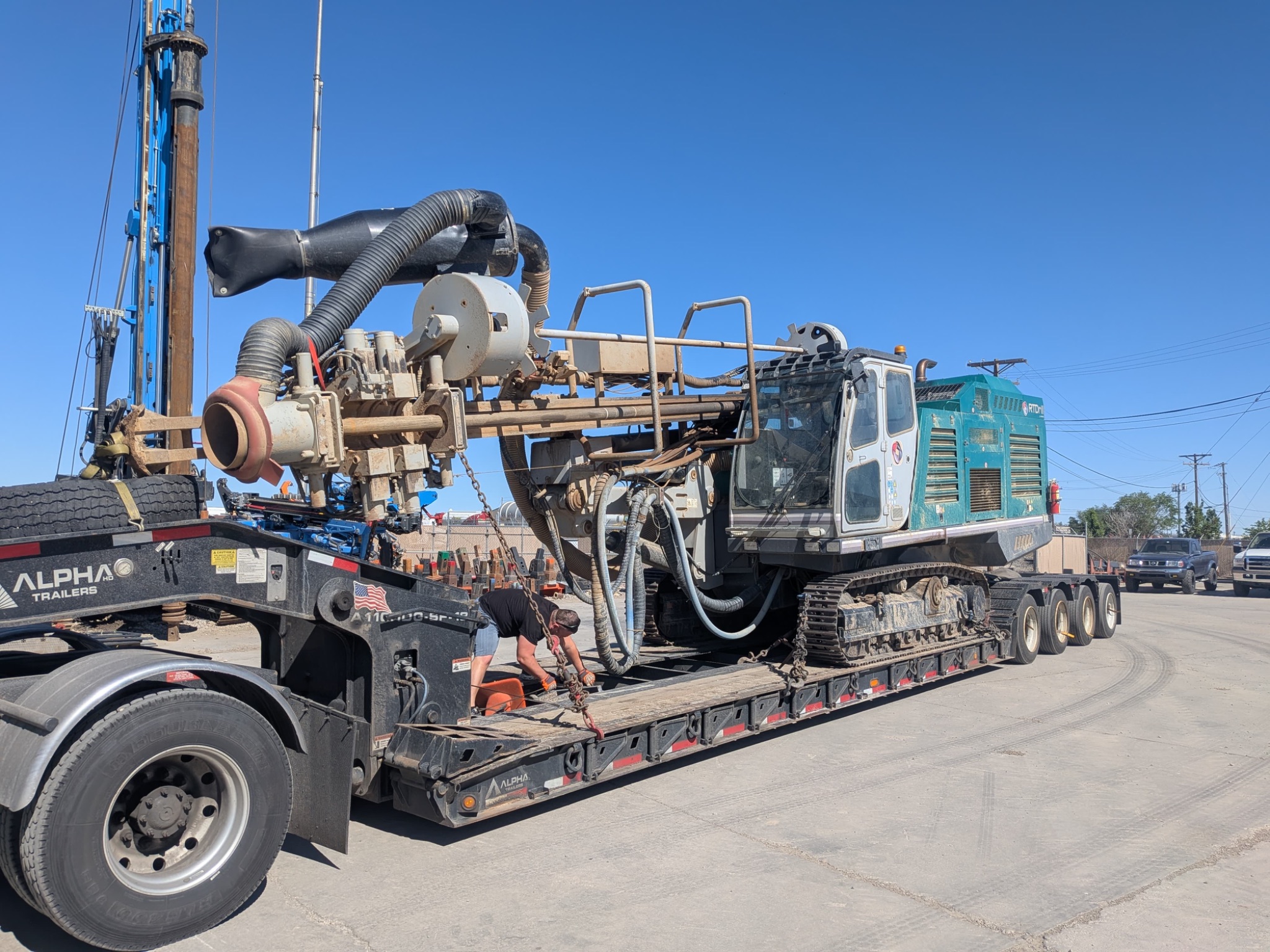
Get your RTDrill by Reichdrill drilling machine from Western Equipment Solutions
Western Equipment Solutions is your trusted partner for high‑performance drilling equipment, drilling supplies, and complete equipment solutions tailored to quarry, mining, and construction operations. Backed by reliable parts, strong support, and a focus on maximizing uptime, we help keep your rigs running smoothly from setup to production. Visit Western Equipment Solutions today to outfit your next project with the right gear.