
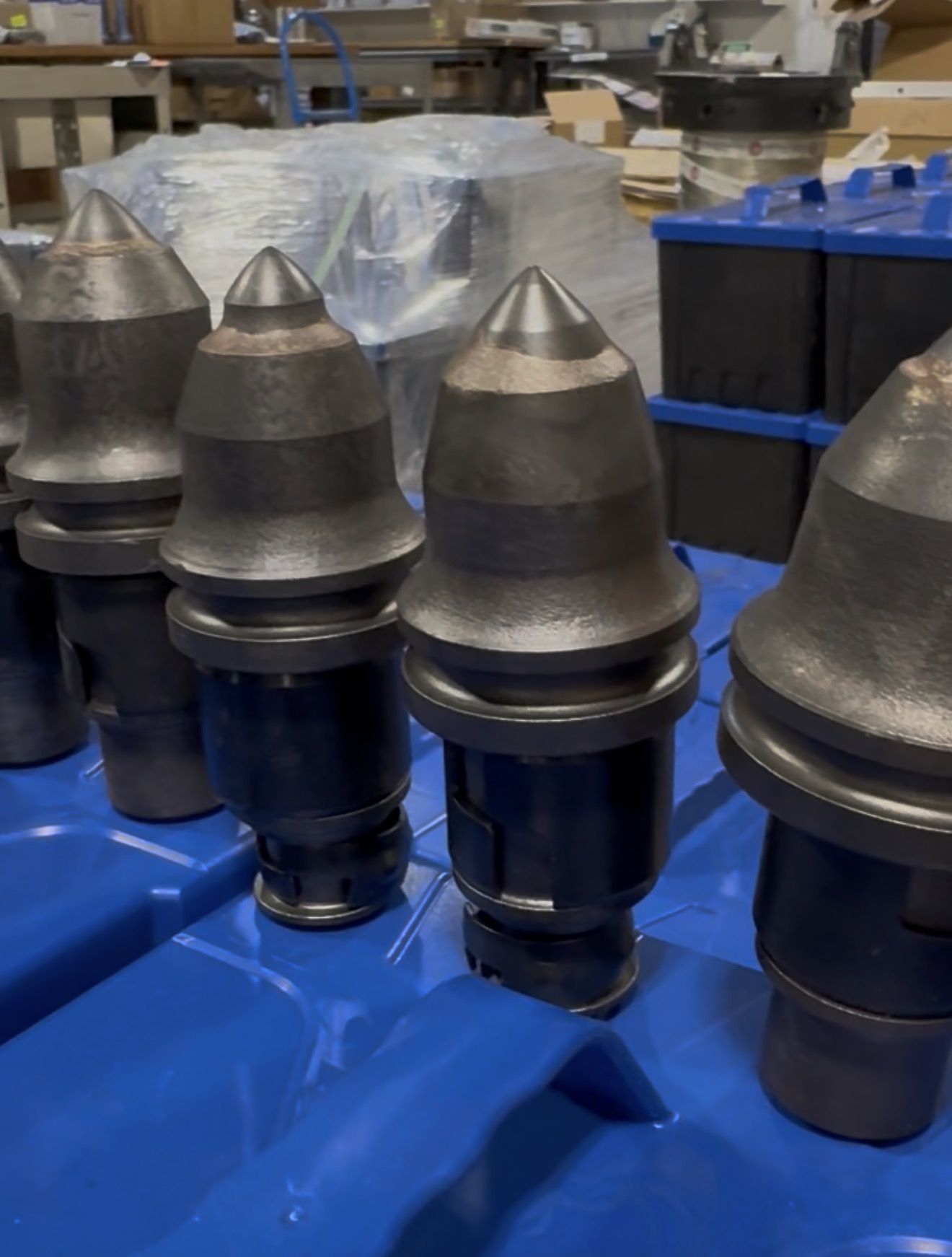
Carbide teeth are heavy-duty cutting tools that improve drilling performance, reduce wear, and increase productivity in tough ground conditions. Gruseck carbide conical teeth feature durable tungsten carbide tips that help foundation drilling equipment cut through abrasive soil, rock, concrete, and other demanding materials more efficiently, reducing downtime and operating costs.
In drilling and excavation, tooling matters as much as the machine itself. Even the most powerful rigs struggle when wear sets in or when operators improperly match the teeth, slowing penetration and increasing vibration. That’s why contractors rely on high-quality carbide teeth to keep production moving in hard ground conditions.
Gruseck carbide conical teeth work in the most demanding applications where durability, cutting efficiency, and consistent performance matter most. These teeth help crews drill faster, reduce tooling wear, and minimize costly downtime.
In this guide, we’ll break down how carbide conical teeth work, why contractors use them, how to replace them, and what makes Gruseck a trusted name in drilling equipment solutions.
Table of Contents
ToggleWhat are Gruseck carbide conical teeth?
Gruseck carbide conical teeth are replaceable cutting tools commonly used on drilling and excavation attachments. Each tooth features a hardened steel body and a tungsten carbide tip that withstands extreme abrasion and impact.
Operators commonly install these teeth on:
- Rock Augers
- Core Berrels
- Digging buckets
- Trenchers
- Hydromill milling drums
- Mining and quarry equipment
- Casing teeth
Unlike standard steel teeth, carbide teeth maintain sharp cutting edges much longer in hard rock and abrasive formations. This improves penetration rates and reduces wear on the rest of the machine.
Tooling directly impacts production rates. Sharp carbide teeth reduce stress on the rig while improving cutting efficiency in difficult ground conditions.
How carbide conical teeth work
Carbide conical teeth cut by concentrating force into a hardened tungsten carbide tip. As the tool rotates and contacts the ground, the carbide fractures and chips away material while resisting wear far better than standard steel.
In many applications, the conical design allows the tooth to rotate naturally during operation. This helps distribute wear evenly across the carbide tip and extends service life.
Modern foundation-drilling equipment depends heavily on proper tool selection. The wrong tooth setup reduces productivity, increases vibration, and places unnecessary strain on rotary heads, feed systems, and hydraulic components.
Why contractors use carbide teeth
Contractors rely on carbide teeth because they improve drilling performance while lowering overall operating costs.
- Faster drilling: Sharp carbide tooling cuts through hard formations more efficiently, helping crews maintain production rates.
- Longer wear life: Tungsten carbide resists abrasion far better than traditional steel teeth.
- Reduced downtime: Fewer tooth changes mean less interruption during drilling operations.
- Lower machine stress: Sharp tooling reduces vibration, allowing rigs to maintain penetration without excessive force.
- Better hole quality: Consistent cutting performance helps create cleaner, straighter holes.
For contractors investing in equipment solutions, tooling quality often makes a bigger difference than many people realize. Proper carbide setups improve machine performance and long-term operating costs.
Step-by-step guide to replacing carbide teeth
Correctly replacing worn carbide teeth helps maintain drilling efficiency and protects tooling holders from damage.
- Inspect the tooling: Check for rounded carbide tips, cracked tooth bodies, broken retainers, and excessive holder wear.
- Secure the equipment: Lower the attachment safely and follow lockout procedures before starting work.
- Remove the worn tooth: Most teeth use pin-and-retainer systems. Use a punch and hammer to remove the retaining pin and pull the tooth from the holder.
- Clean the holder: Remove dirt, rust, and debris before installing the new tooth.
- Install the new tooth: Insert the replacement tooth fully into the holder and secure the retaining system properly.
- Inspect the tooling pattern: Check spacing and wear patterns across the tool to ensure balanced cutting performance.
Common applications for carbide conical teeth
Multiple industries use Gruseck carbide conical teeth because they withstand extreme ground conditions.
- Foundation drilling: Installed on augers, buckets, and core barrels used in deep foundation work.
- Quarry and mining operations: Used heavily on blast hole tooling and rock excavation equipment.
- Trenching: Helps trenchers cut through compacted soils and rock.
- Construction and excavation: Ideal for abrasive environments where standard tooling wears quickly.
These versatile equipment solutions enable contractors to adapt tooling setups to specific soil and rock conditions.
Why quality tooling matters
Good tooling impacts nearly every aspect of drilling performance. Benefits of quality carbide tooling include:
- Improved penetration rates
- Reduced fuel consumption
- Extended equipment life
- Lower maintenance costs
- Reduced vibration
- Minimal downtime
- Improved productivity
Even the best foundation drilling equipment performs poorly with worn or low-quality teeth. That’s why experienced crews closely monitor tooling condition throughout the drilling cycle.
Common mistakes to avoid
- Running worn teeth for too long: Dull tooling increases machine stress and reduces drilling speed.
- Ignoring uneven wear: Uneven tooth patterns create vibration and poor cutting performance.
- Using the wrong tooth type: Different formations require different carbide setups.
- Failing to inspect holders: Damaged holders reduce tooth retention and accelerate wear.
- Poor installation practices: Improperly seated teeth loosen prematurely and damage tooling.
Contractors who invest in complete equipment solutions understand that tooling maintenance is critical to long-term productivity.
Important drilling and tooling facts
- Tungsten carbide is significantly harder than standard hardened steel.
- Proper tooling selection can dramatically improve drilling efficiency.
- DTH and rotary drilling both rely heavily on quality carbide tooling.
- Worn teeth increase fuel burn and hydraulic stress.
- Sharp carbide teeth improve overall hole consistency.
Recommended tooling and equipment
Common tools used with carbide teeth
- Augers
- Core barrels
- Rock buckets
- DTH hammer bits
- Tricone bits
- Trenching chains
Recommended support equipment
- Air compressors
- Rotary drilling rigs
- Blast hole drills
- Heavy-duty excavation tooling
Choosing the right tooling package for your foundation drilling equipment helps maximize productivity and reduce operating costs.
FAQ
How long do carbide teeth last?
Tool life depends on ground conditions, drilling pressure, and maintenance practices. In abrasive rock, teeth wear faster than in softer formations.
Why are carbide teeth better than steel teeth?
Carbide teeth resist wear far better than standard steel, helping maintain cutting performance longer in hard ground conditions.
How often should carbide teeth be inspected?
Crews should inspect tooling daily during heavy drilling operations to identify wear, cracking, or damaged holders before performance drops.
Can carbide teeth be replaced individually?
Yes. Most carbide conical teeth use replaceable pin-and-retainer systems that allow individual tooth replacement.
Why does tooling matter so much in drilling?
Tooling directly impacts penetration rate, fuel consumption, vibration, and rig wear. Proper tooling improves both productivity and machine life.
Get your carbide teeth from Western Equipment Solutions
Gruseck carbide conical teeth play a major role in improving drilling performance across quarry, mining, excavation, and foundation applications. High-quality carbide teeth help crews drill faster, reduce downtime, and protect valuable foundation drilling equipment from unnecessary wear.
Whether you’re working in abrasive rock, tough soil, or demanding production environments, the right tooling setup makes a major difference in productivity and operating costs.
If you’re looking for reliable drilling tooling and complete equipment solutions, look no further. Contact Western Equipment Solutions to learn more about carbide tooling, drilling support equipment, and solutions built for real jobsite conditions.