
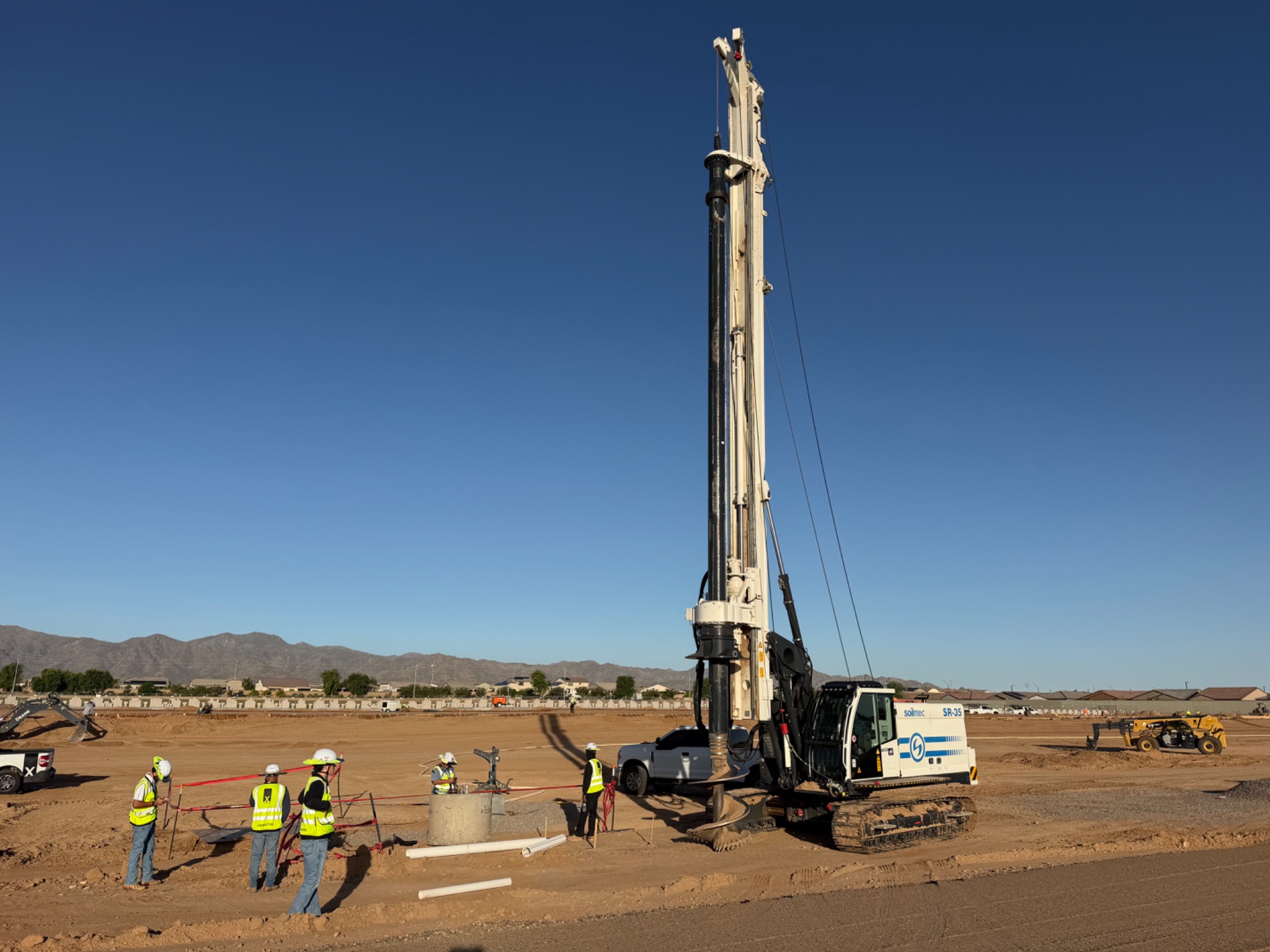
Groundwater and stormwater present different challenges on construction sites. Dry wells and recharge wells provide engineered solutions for returning water to the ground where conditions permit.
For contractors installing large-diameter dry wells and certain recharge structures, successful construction begins with understanding subsurface conditions and selecting the appropriate drilling equipment. Unstable soils, groundwater, and demanding depth or diameter requirements can make temporary casing and specialized rotary drilling equipment essential to the installation process.
This guide explores the differences between dry wells and recharge wells, with a focus on the drilling methods, casing systems, and foundation drilling equipment used in applicable well construction projects.
In this guide
What are dry wells and recharge wells?
A dry well is an underground stormwater management structure that collects runoff and allows it to infiltrate into surrounding permeable soils. Dry wells range from relatively shallow, aggregate-filled excavations to deeper, drilled structures designed for site-specific drainage requirements.
Recharge wells introduce water into subsurface formations to support groundwater replenishment or other engineered groundwater management objectives.
EPA identifies qualifying stormwater drainage wells as Class V injection wells (read about the study here). Many are authorized by rule, provided applicable inventory, groundwater protection, and other requirements are met.
However, permitting authorities may impose additional requirements or require individual permits. EPA also instructs owners of new stormwater drainage wells to contact their permitting authority before construction.
How to choose the right approach
The right solution starts with the problem you’re trying to solve.
- If runoff needs a place to go on a finished site, a dry well is usually the answer.
- If surface infiltration is impractical and the goal is to return water to the aquifer, a recharge well may be a better fit.
- If groundwater is blocking excavation, temporary water-table control comes first.
Many projects need more than one. Soil permeability, groundwater depth, available space, and local regulations should drive the decision, so involve your geotechnical engineer and drilling contractor early to avoid redesigns once equipment is on site.
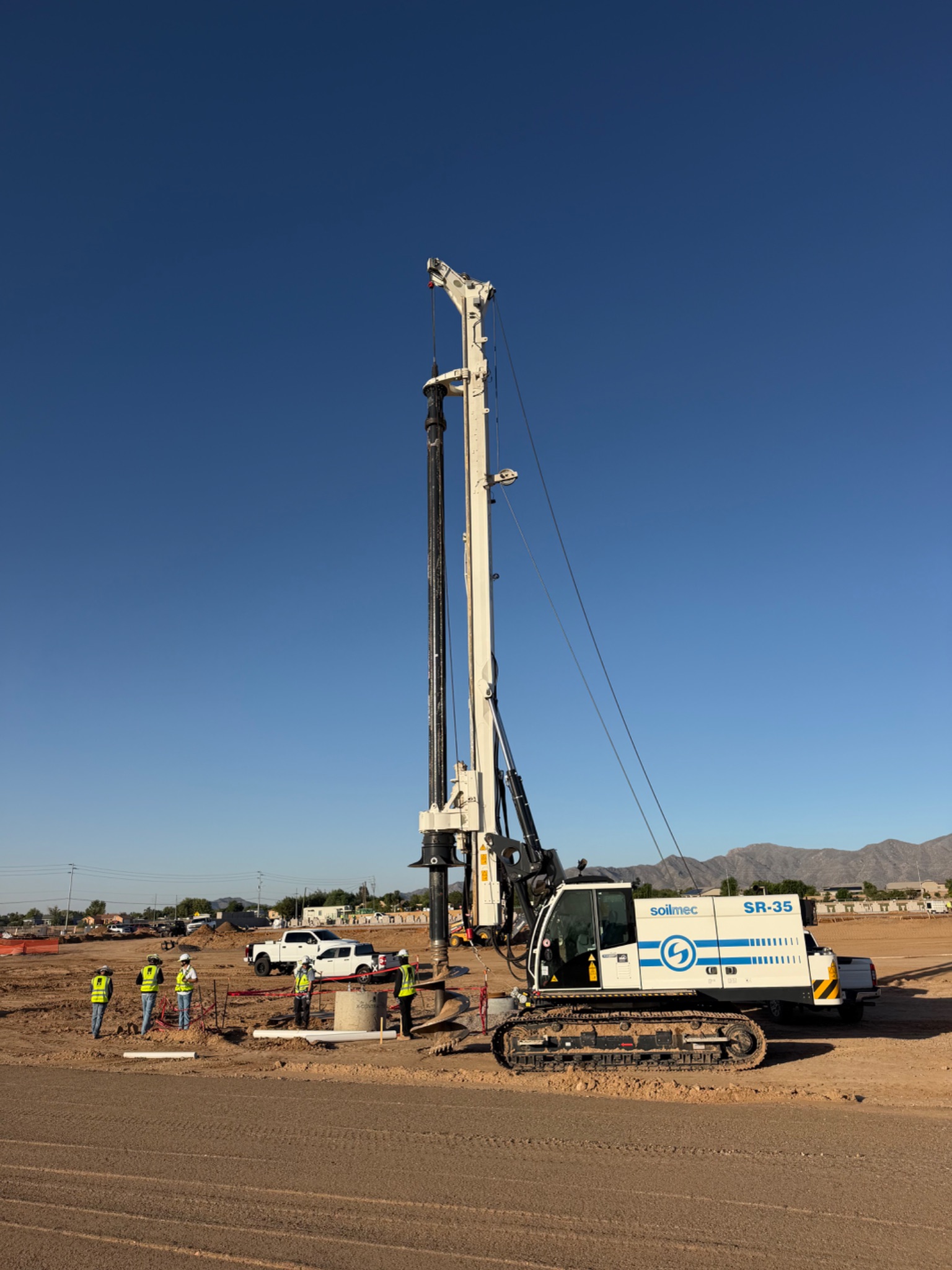
Step-by-step dry well installation guide
Dry well installation follows a repeatable sequence, but every site adjusts it to suit the local ground conditions. This installation sequence applies primarily to drilled, large-diameter dry wells, not every stormwater dry well.
- Review geotechnical and hydrogeological conditions. Evaluate soil permeability, groundwater levels, infiltration capacity, subsurface obstructions, and required separation from groundwater or restrictive soil layers.
- Confirm the engineered design and regulatory requirements. Determine the well’s diameter, depth, storage volume, infiltration characteristics, pretreatment requirements, and applicable setbacks.
- Select the appropriate drilling equipment. Match the drilling rig, tooling, and casing system to the required diameter, depth, access restrictions, and ground conditions.
- Drill and stabilize the borehole. Use rotary drilling methods and temporary casing where required to maintain borehole stability. Monitor drilling conditions and groundwater inflow.
- Install the engineered infiltration system. Depending on the design, this may include aggregate, perforated structures, permanent casing, filter materials, or other specified components. Not all dry wells use the same construction materials.
- Install connections and pretreatment systems. Connect stormwater piping, catch basins, sediment removal structures, and other specified components.
- Complete casing extraction and site restoration. When temporary casing is used, remove it in accordance with the engineered installation sequence to prevent collapse or damage to the completed infiltration system.
- Verify system performance. Complete required inspections, testing, documentation, and commissioning before placing the system into service.
When groundwater is a factor, groundwater control comes first. Common approaches include sumps for shallow inflow, wellpoints for shallow granular soils, and deep wells for larger drawdown. The right method depends on soil permeability and required depth, which is why site data drives every decision.
Why proper water management matters
- Keeps excavations stable and workers safe
- Prevents flooding and erosion on finished sites
- Recharges groundwater where conditions allow
- Reduces schedule delays and rework
- Supports compliance with local stormwater rules
- Lowers long-term maintenance when designed correctly
Mistakes to avoid
- Skipping the geotechnical review
- Ignoring groundwater depth and seasonal changes
- Underestimating casing needs in unstable soil
- Sending untreated runoff into a dry well
- Overlooking setbacks and state rules
- Using undersized equipment
Key facts for planning
- States differ in their approaches to setbacks and monitoring, and the EPA directly manages dry well programs in several states.
- Several states, including Oregon and Washington, do not permit dry wells at vehicle servicing areas or gas stations.
- Clogging from sediment and debris is a common drainage well problem, which makes pretreatment essential.
Equipment for dry wells
- Large-diameter foundation drilling rigs
- Casing oscillators and rotators
- Temporary steel casing systems
- Drilling buckets, augers, and core barrels
Western Equipment Solutions supplies Soilmec and Tescar rigs, casing systems, oscillators, rotators, and tooling.
Frequently asked questions about these projects
What is the difference between a dry well and a recharge well?
A dry well manages stormwater by letting it soak into the surrounding soil. A recharge well returns water to the aquifer, often where surface infiltration is impractical. Both typically fall under EPA’s Class V category and require site-specific engineering.
What equipment is used to install large-diameter dry wells?
Large-diameter drilled dry wells and recharge structures may require rotary foundation drilling rigs equipped with Kelly bars, drilling buckets, augers, and specialized tooling selected for the site’s soil and rock conditions.
In unstable or saturated ground, temporary steel casing may be advanced using a casing oscillator, casing rotator, or compatible rig-mounted casing system to maintain borehole stability during excavation.
Are dry wells regulated?
Yes. EPA regulates dry wells used for stormwater as Class V injection wells, and many states add their own rules for setbacks, siting, and monitoring. Always confirm current requirements with your state or local authority before design or installation begins.
Get the right drilling equipment for your next project with Western Equipment Solutions
Successful dry well and recharge well construction starts with understanding the ground conditions and having the right equipment for the job. From large-diameter drilling to challenging soil conditions requiring temporary casing, proper equipment selection helps contractors maintain productivity, minimize downtime, and keep projects moving.
Western Equipment Solutions provides contractors with industry-leading foundation drilling equipment from Soilmec, Tescar, and LEFFER, along with casing systems, specialized drilling tooling, equipment rentals, parts, and service.
Whether you’re drilling large-diameter dry wells, installing recharge wells, or tackling challenging foundation drilling applications, our experienced team can help you select equipment suited to your project’s depth, diameter, access restrictions, and ground conditions.
Contact Western Equipment Solutions to discuss your next project and discover the equipment and support available throughout the Western United States and Western Canada.
Real Equipment. Real Support. Real Solutions.
Disclaimer
For Informational Purposes Only
The information in this article is intended for general educational and informational purposes only. Equipment specifications, drilling capabilities, applications, and operating conditions vary with equipment configuration, ground conditions, project requirements, and site-specific circumstances.
Western Equipment Solutions does not provide engineering, geotechnical, hydrogeological, environmental, or regulatory consulting services. References to dry wells, recharge wells, dewatering, EPA Class V injection well requirements, and state or local regulations are provided for general awareness. They are not a substitute for the project’s engineered design, applicable regulations, manufacturer guidelines, or guidance from qualified professionals.
Dry well and recharge well requirements, including permitting, registration, setbacks, siting, pretreatment, and monitoring, vary by jurisdiction and may change. Contractors and project owners are responsible for confirming current requirements with the appropriate federal, state, provincial, and local authorities before design or construction.
Contractors and equipment operators are responsible for evaluating jobsite conditions, selecting appropriate equipment, and complying with all applicable laws and regulations. Western Equipment Solutions assumes no responsibility for equipment selection, construction methods, or jobsite decisions made based on the information in this article.