

Why comparing foundation drilling vs. water well drilling matters
Contractors, engineers, and property owners often lump all drilling work together, but foundation drilling and water well drilling solve completely different problems. Confusing the two can lead to the wrong drill on the wrong job, missed permits, or budget surprises.
This guide breaks down the following:
- How each method works
- What drilling and foundation equipment looks like on a job site
- Where dewatering and dry well considerations come into play on both types of projects.
Whether you’re specifying equipment for a bridge pier or scouting a rig for a residential well, you’ll walk away knowing exactly which discipline you need. Keep reading to learn more.

What is foundation drilling?
Foundation drilling is used to construct deep foundations that support the following:
- Buildings
- Bridges
- Retaining walls
- Transmission towers
- Other structures
Not every foundation drilling job calls for a large-diameter shaft. Micropiles are a small-diameter, high-capacity alternative used where a full-size drill can’t fit or a traditional drilled shaft isn’t practical.
They’re still foundation drilling in every sense: permanent, load-bearing, and filled with grout and reinforcement rather than left open. The difference is scale and access.
What is water well drilling?
Water well drilling allows access to underground water sources for residential, agricultural, municipal, or industrial use. Water well rigs drill relatively small-diameter holes and install well casing that allows water to flow into the completed well.
Since water wells are typically truck-mounted and are designed to drill to deeper depths, you can drill deeper and get a greater pullback.
How the two methods compare
- Purpose — Foundation drilling supports structures. Water well drilling accesses groundwater.
- Diameter — Foundation shafts can run several feet in diameter. Water wells are usually less than a foot in diameter.
- What fills the hole — Concrete and rebar versus casing, screen, and gravel pack.
- Regulation — Foundation work follows structural and building codes. Water wells fall under state water-quality rules and licensed-driller requirements.
- Water management on site — Both trades manage water, but in different ways. Foundation crews often need dewatering to keep excavations sufficiently dry for concrete placement and may install a dry well nearby to handle site runoff. Well drillers, by contrast, are actively trying to produce water, not remove it.
- Equipment scale — Drilling and foundation equipment tends to be larger with higher torque than water well drills.
Why the distinction matters
- Prevents specifying the wrong drill or crew for the job
- Keeps permitting and inspection requirements straight from day one
- Helps budget accurately; foundation drilling equipment and water well drills carry very different rental and operating costs
- Reduces schedule risk when you need dewatering to keep a foundation excavation workable
- Clarifies who’s responsible for what: a structural engineer signs off on foundation work, while water quality testing governs well completion
Common mistakes to avoid
- Assuming any drill rig can handle both jobs
- Skipping a geotechnical report before foundation drilling
- Underestimating dewatering needs on a wet site, leading to delays
- Forgetting dry well or stormwater management requirements during foundation excavation
- Hiring an unlicensed driller for a water well can void insurance and violate state law
- Ignoring shaft-bottom cleaning before concrete placement in foundation work
Key stats and data points
- Drilled shaft diameters commonly range from 2 to 10+ feet, depending on load requirements
- Most domestic water wells fall between 100 and 500 feet deep, depending on the regional aquifer depth
- Dewatering during foundation excavation is one of the most common causes of schedule delay on wet or high-water-table sites
- Foundation drilling equipment is typically rated for far higher torque output than standard water well drills, since it has to advance through rock and stiff soils at larger diameters
Equipment you’ll see on each job site
Foundation drilling equipment
- Rotary drill rigs (crane-mounted or purpose-built piling rigs)
- Augers, drilling buckets, and core barrels
- Casing oscillators and rotators
- Reinforcement cages and tremie pipes for concrete placement
- Dewatering pumps to keep excavations workable in high water-table conditions
Water well drilling equipment
- Rotary or cable tool rigs
- Tricone, drag bit or down-the-hole hammer bit
- Well casing and screen
- Mud pumps or air compressors
FAQ
Can the same rig do both foundation and water well work?
Yes. Micropile drills can overlap with shallow wells, and vice versa.
Are micropiles used in foundation drilling or water well drilling?
Micropiles are a foundation-drilling technique, not a water-well method. They’re small-diameter, high-capacity piles used to support structures in tight-access or low-headroom conditions — the same structural purpose as a drilled shaft, scaled down for sites where a larger drill won’t fit.
Does foundation drilling always require dewatering?
Not always, but any site with a high water table or groundwater intrusion during excavation will likely require dewatering to keep shaft bottoms clean and maintain viable concrete placement.
What’s the role of a dry well in foundation projects?
A dry well manages stormwater or surface runoff around a completed foundation, keeping water away from the structure. It’s a site drainage feature, not part of the load-bearing system itself.
Who regulates water well drilling versus foundation drilling?
Water wells fall under state water-quality and licensed-driller regulations. Foundation drilling follows structural and building codes enforced through local permitting and engineering review.
Foundation drilling vs. water well drilling in the Western US
Across Utah and the broader Mountain West, both trades face unique ground conditions, including expansive soils, variable bedrock depths, and seasonal water tables that shift with snowmelt.
Contractors working foundation projects in this region often need dewatering plans built into the schedule from the start. At the same time, well drillers contend with aquifer depths that vary sharply from valley floors to higher elevations.
Matching the right drilling and foundation equipment to local ground conditions is the difference between a job that stays on schedule and one that doesn’t.
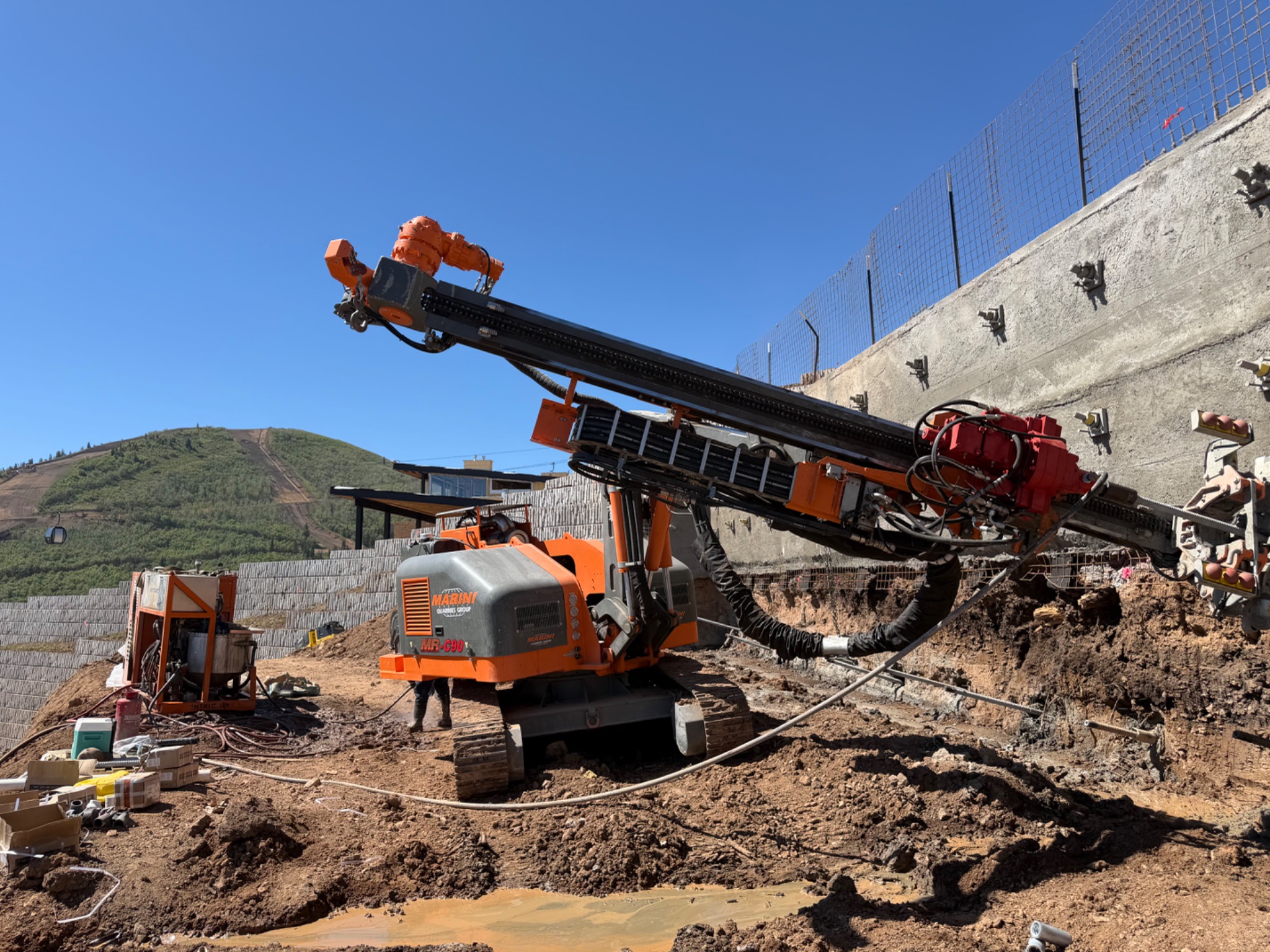
What Western Equipment Solutions offers
Having the right foundation equipment partner matters. Western Equipment Solutions supports foundation drilling and ground engineering work across the Western US and Western Canada, backed by a full range of equipment, tooling, and hands-on support.
Equipment sales, new and used
We carry a full line of drilling and foundation equipment from top manufacturers, including:
- Soilmec
- TEI Rock Drills
- Leffer
- Tescar
- Marini
Whether you need a large-diameter piling rig or a compact drill for low-headroom access, we help you find the right machine for the job.
Rental equipment
Not every project calls for a purchase. We offer rental options across our equipment line, so contractors can scale up for a specific job without carrying the full cost of ownership.
Drilling tooling and parts
Beyond drills, we stock a large inventory of drilling tools and foundation equipment and spare parts, plus fast-turnaround parts support to keep a job moving.
On-site technical support and field service
Our team provides on-site technical support and service around the clock, every day of the year. When a rig goes down mid-project, that kind of responsiveness is the difference between a short delay and a blown schedule.
Operator training
We host operator training sessions throughout the US and Canada. A well-trained operator runs the equipment more safely and productively and gets more life out of it.
Equipment financing
We offer leasing, loans, equipment refinancing, residual leases, seasonal payment options, and repair financing.
Our team supports contractors across the full range of deep foundation and ground engineering work and project types, including:
- Bridge construction
- Transportation infrastructure
- Utilities
- Marine construction
- Renewable energy
- Commercial foundation work
Whatever your next project involves, our sales and support team is here to help you get it done.

Get your foundation drilling equipment from Western Equipment Solutions
Western Equipment Solutions has supplied drilling and foundation equipment to contractors across the Western US and Western Canada since 2017, backed by trusted manufacturers, a deep parts inventory, and technical support that doesn’t clock out. When you’re ready to move forward, we’re ready to help.
Talk to our team today to find the right equipment for your next foundation project. While you’re at it, explore our inventory or ask about financing options tailored to your schedule.